 Made in Canada
 Order Status
 Doors
Doors Windows
 (905) 303-0560
Let’s be real for a second: you aren’t just painting a door; you’re managing an asset.
I’ve walked up to hundreds of homes in my career. Sometimes, I walk up to a front door and I instinctively want to open it. Other times? I want to get back in the car.
The difference isn’t always the architecture or the landscaping. It’s the paint.
At Luma Doors, we constantly see homeowners make the same expensive mistake. They choose a colour they love personally, forgetting that they might need to sell the house in five years. And here is the hard truth: buyers are judgmental. If your front door looks “difficult” or “weird,” they assume the rest of the house is too.
You want to know which colours act like a “Do Not Enter” sign for potential buyers? Let’s break it down.
1. The “look at me” Bright Orange
I love a good sunset, but I don’t want to see it on your front door.
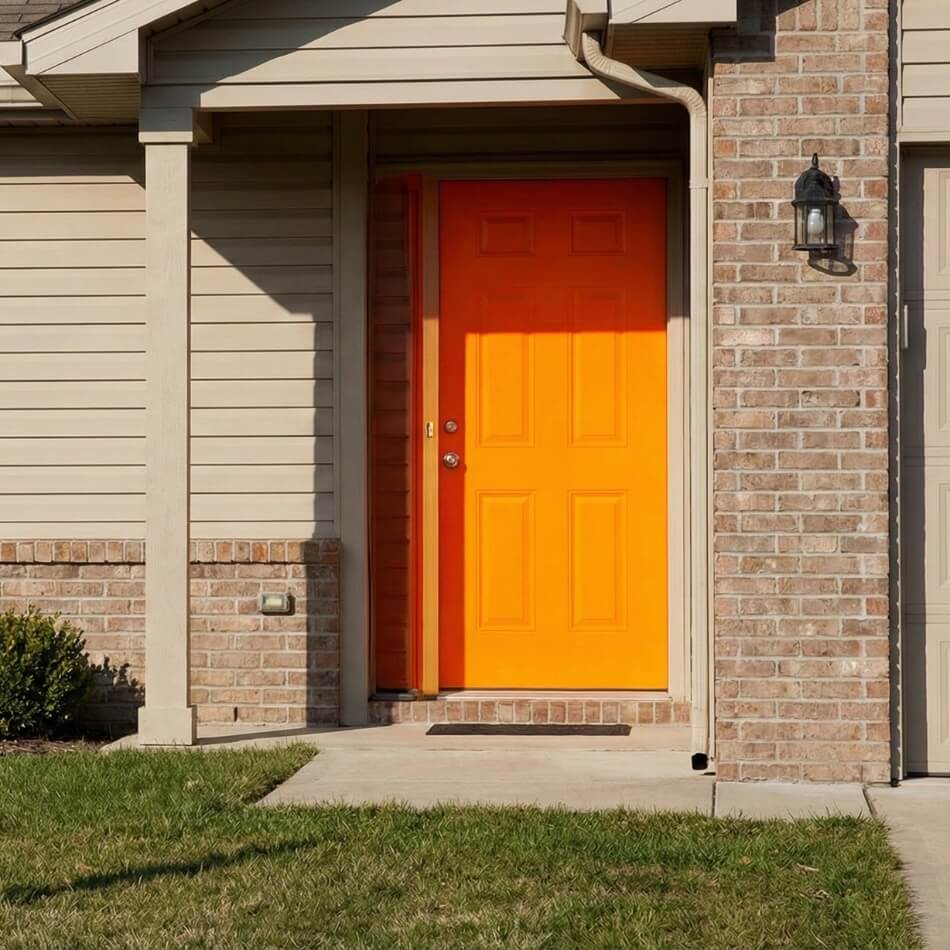
While some design magazines might call orange “energetic” or “bold,” in the real estate market, it reads as “aggressive.” It is arguably the riskiest colour you can choose.
Why? Because it clashes with almost everything. Unless you have a very specific Mid-Century Modern home with grey siding, orange creates visual friction. It’s hard to look at. When a buyer pulls up to the curb, you want them to feel welcomed, not shouted at.
The Fix: If you want warmth, go for a deep Burnt Sienna or a rich natural wood finish.
Pale pink front door lacking curb appeal.There is a massive difference between a high-end Mahogany wood finish and “UPS Truck Brown” paint.
Solid, flat brown paint often looks dated, like the house hasn’t been touched since 1980. It hides the details of the door and makes the entryway feel dark and uninvited.
At Luma Doors, we often replace old, painted brown steel doors with wood-textured fiberglass front doors that mimic real wood grain. The difference is night and day. One looks like a cheap cover-up; the other looks like luxury.
3. Moss Green or “Avocado”
Green can be beautiful. A deep, dark Hunter Green or a sophisticated Sage? Stunning.
But that yellowish, pale “Avocado” green? It reminds buyers of dated kitchen appliances. It tends to look sickly against red brick (which is very common in our area). Instead of blending with your garden, it competes with it.
If your door colour makes people think of old vegetables, it’s lowering your appraisal.
4. Bright Purple or Violet
Purple is the colour of royalty, but it’s not the colour of a quick sale.
This is a classic example of “Personal Taste vs. Market Value.” You might love purple. It might be your favourite colour. But to a buyer, a purple door screams, “You are going to have to paint this the second you move in.”
Whenever you give a buyer a “to-do” list before they’ve even unlocked the door, you are losing money.
5. Pale Pink (The “Millennial” Pink)
A few years ago, this was trendy on Instagram. Now? It looks tired.
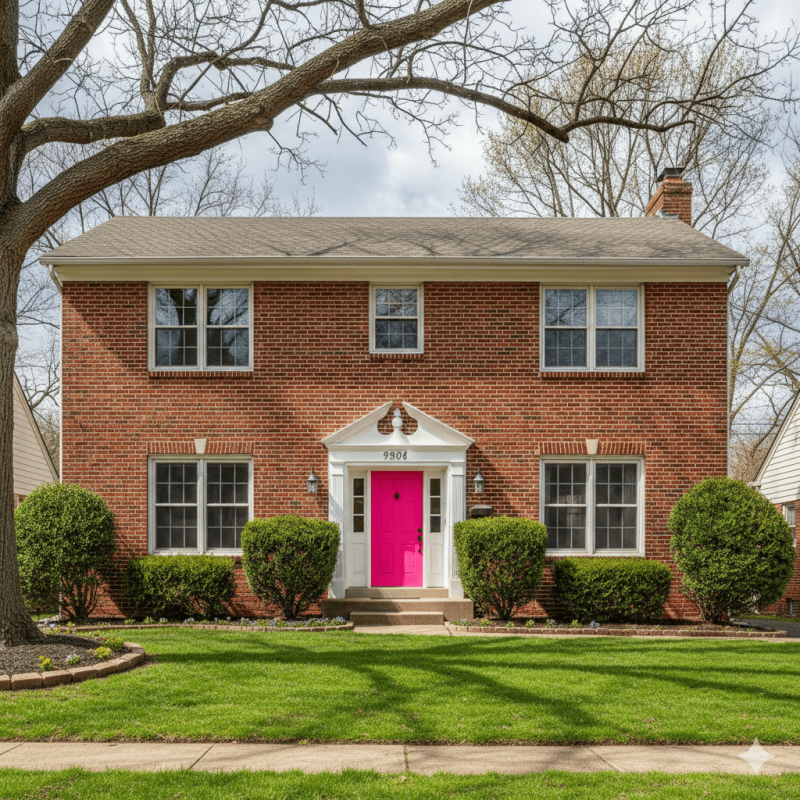
Pale pink lacks authority. A front door needs to anchor the house. It needs to feel solid and secure. Pastels, in general, tend to look flimsy on an exterior. They show dirt easily, scuff quickly, and fade fast under the sun.
The Rule of Thumb: If it looks like it belongs on a nursery wall, keep it off your front door.
Front door paint color do’s and don’ts chart
6. Jet Black (If your door faces the sun)
Wait, isn’t black the most popular door colour right now?
Yes, modern black entry doors and Iron Ore are our best-sellers at Luma Doors. They are sleek and modern. However, they decrease value if you use them in the wrong spot.
Aggressive orange paint on front door.If your front door faces South or West and gets direct sunlight all day, a black door will absorb massive amounts of heat. I have seen black doors get so hot you can’t touch them. This heat causes wood to warp, paint to peel, and fiberglass to degrade faster.
A peeling, warped black door looks cheap. If you want the dark look without the heat damage, you need high-quality, heat-reflective finishes, something we specialize in rather than just slapping cheap black latex paint on a hardware store slab.
7. Fire Engine Red (The wrong shade)
“Red doors mean good luck!”
Sure, in theory. But there is “Heritage Red” (classy, deep, wine-coloured) and then there is “Fire Engine Red” (bright, alarming, cheap-looking).
Bright, primary red can look glossy and plastic-like. It often creates a “toy house” aesthetic rather than a stately home vibe. It’s tricky to get right, and if you miss the mark, it just looks tacky.
So, What Colours Actually Increase Value?
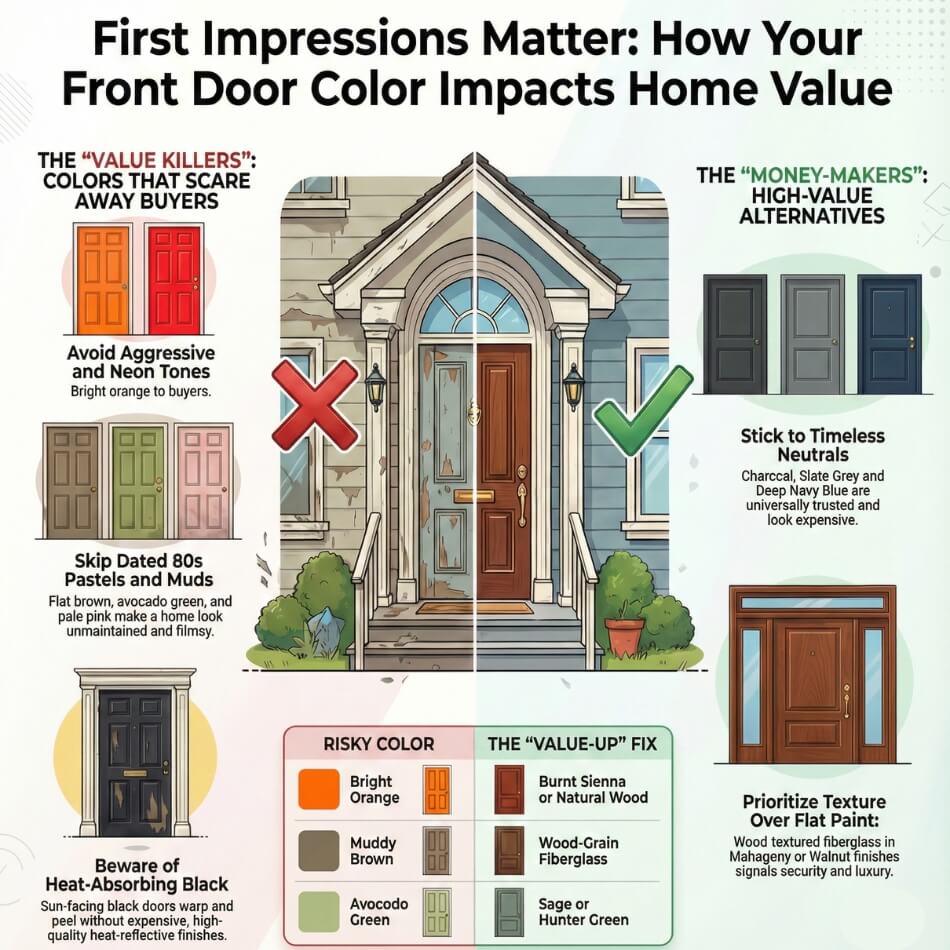
If you want to sell your home for top dollar, you want your door to look expensive, secure, and timeless. According to Zillow studies and our own sales data at Luma Doors, these are the money-makers:
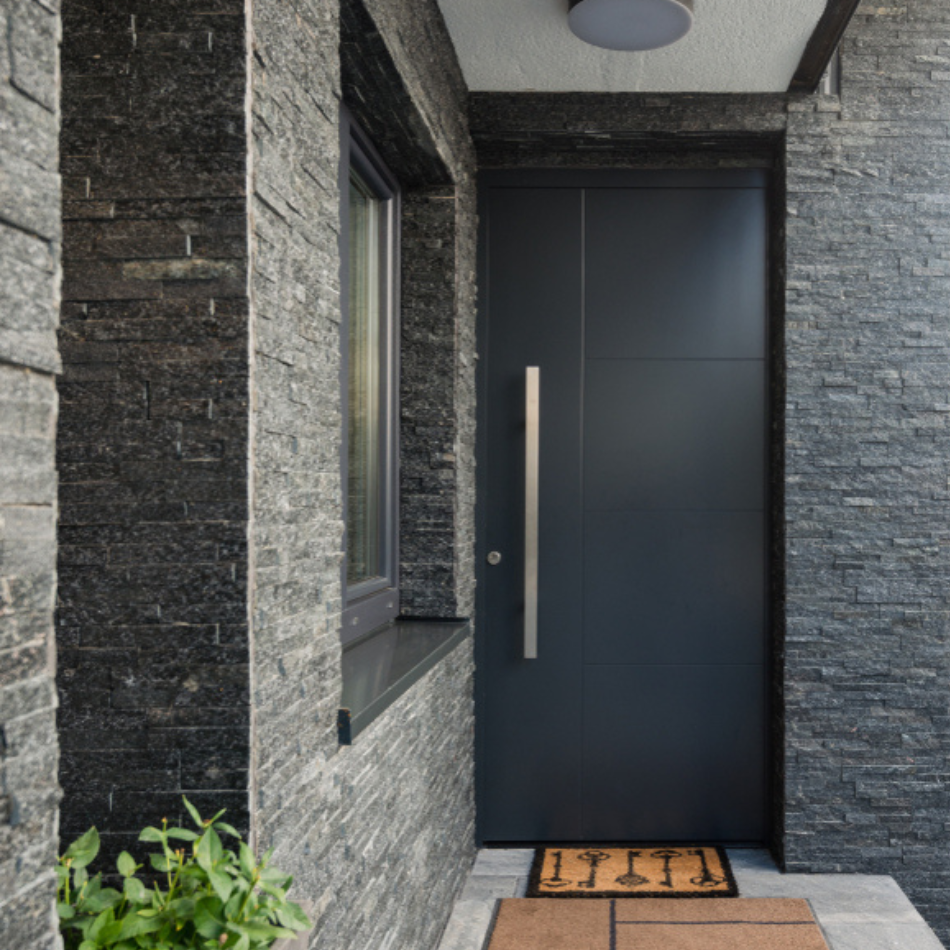
- Charcoal / Slate Grey:Slate-hued exterior doors work on literally every house style.
- Deep Navy Blue: Traditional, calming, and trustworthy.
- Jet Black (The Right Way): Using high-quality, factory-finished materials.
- Natural Wood Tones: Walnut or Mahogany textures that scream “luxury.”
The “Sidewalk Test”
You can analyze Zillow data and read colour theory blogs all day, but the real answer is sitting right outside.
Real estate isn’t just about square footage; it’s about the feel
ing a buyer gets when they pull into the driveway. That feeling of safety, luxury, and care usually starts with the front entrance. You wouldn’t wear a wrinkled suit to a job interview, so why dress your home’s focal point in a colour that expired three decades ago?
If you are unsure if your current door is making the cut, go stand on the curb and look at your house through the eyes of a stranger.
Is your front door inviting the right kind of offers, or is it the one thing holding your property value back?