 Made in Canada
 Order Status
 Doors
Doors Windows
 (905) 303-0560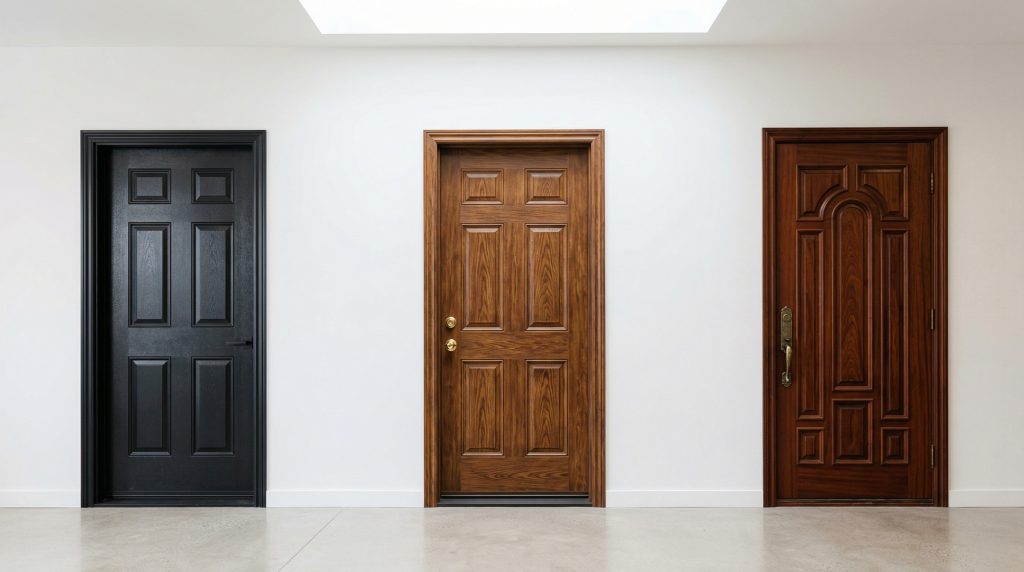
The choice between steel, fiberglass, and wood is the first real decision in any front door replacement project. The marketing brochures will tell you all three are great, which is technically true and practically useless. Each material has a real personality: real strengths, real weaknesses, and real consequences for what your front door looks like in ten years. Here is the honest comparison from someone who has installed all three on hundreds of GTA homes, and what we would actually recommend for a Toronto winter in 2026.
The short version
If you want the best balance of durability, energy efficiency, and price for a typical GTA home, fiberglass wins. If you want the lowest possible upfront cost and you do not care about insulation value or curb appeal, steel wins. If you want a custom show-piece front door that you are willing to maintain every few years, wood wins. Now the long version.
Steel entry doors
What they are
A steel entry door is two thin sheets of galvanized steel (typically 24 to 26 gauge) glued to a wood frame around the perimeter, with a polyurethane foam core in the middle. The steel face is then primed and painted, sometimes with an embossed wood-grain texture. Most builder-grade front doors on GTA homes built since 1990 are this type.
Strengths
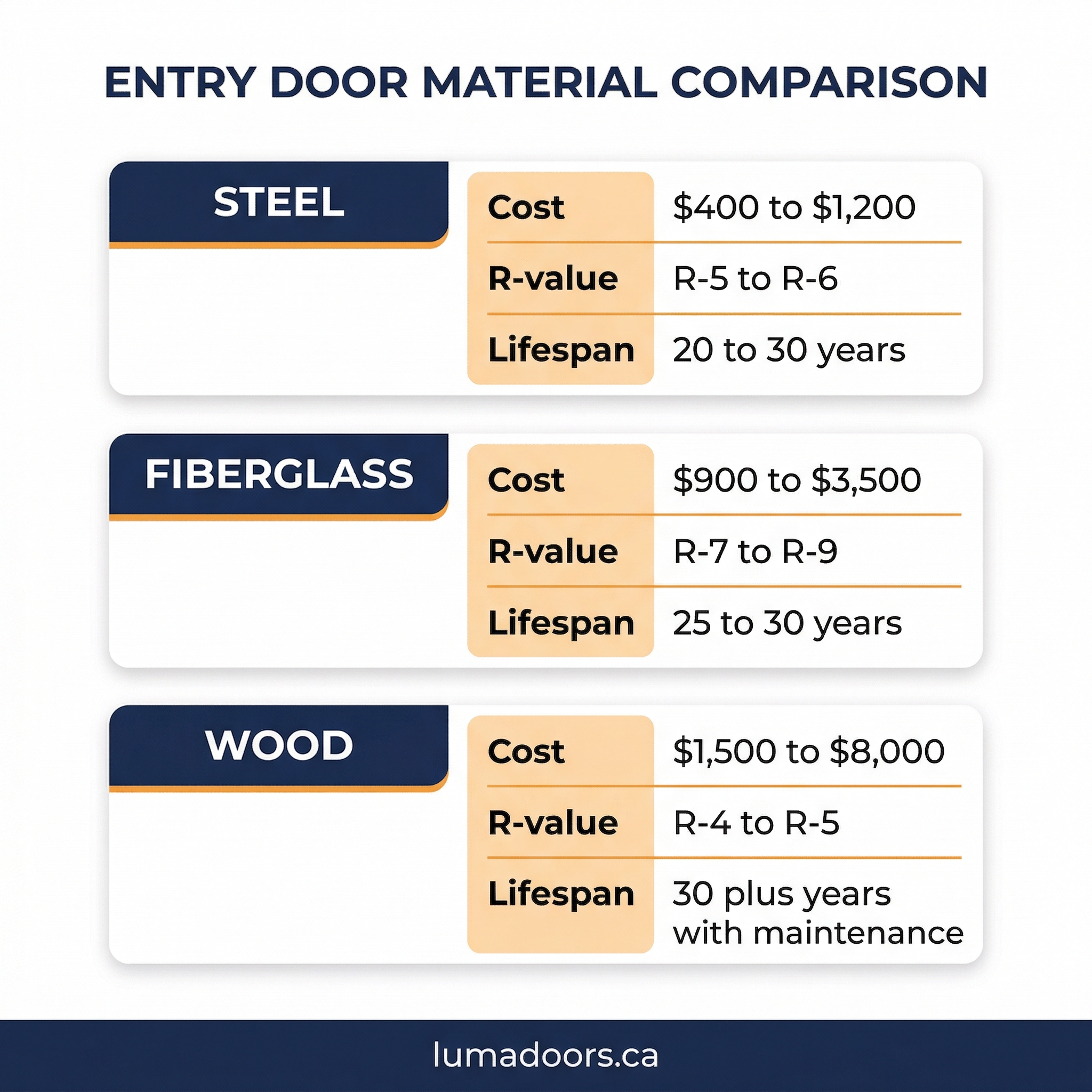
Cheap. Strong against impact and forced entry. Will not warp, rot, or split. Reasonably good insulation thanks to the foam core (typical R-value around R-5 to R-6 for the slab itself). Easy to find in standard sizes at any building supply.
Weaknesses
Dents are permanent. A toddler with a tricycle, a snow shovel, or a delivery driver swinging a parcel will leave dents you cannot pop out. The painted finish chalks and fades after 5 to 8 years of GTA sun exposure, especially on south and west-facing doors. Rust around the bottom edge is common where road salt splashes up. The thermal bridge through the steel skins makes the rated R-value optimistic in real conditions, and condensation forms on the interior steel in cold weather. Repainting is possible but never quite matches the original factory finish.
2026 GTA cost
$400 to $1,200 supplied. Lower end is builder-grade six-panel. Higher end is upgraded with decorative glass and better hardware. Add $400 to $800 for installation.

Fiberglass entry doors
What they are
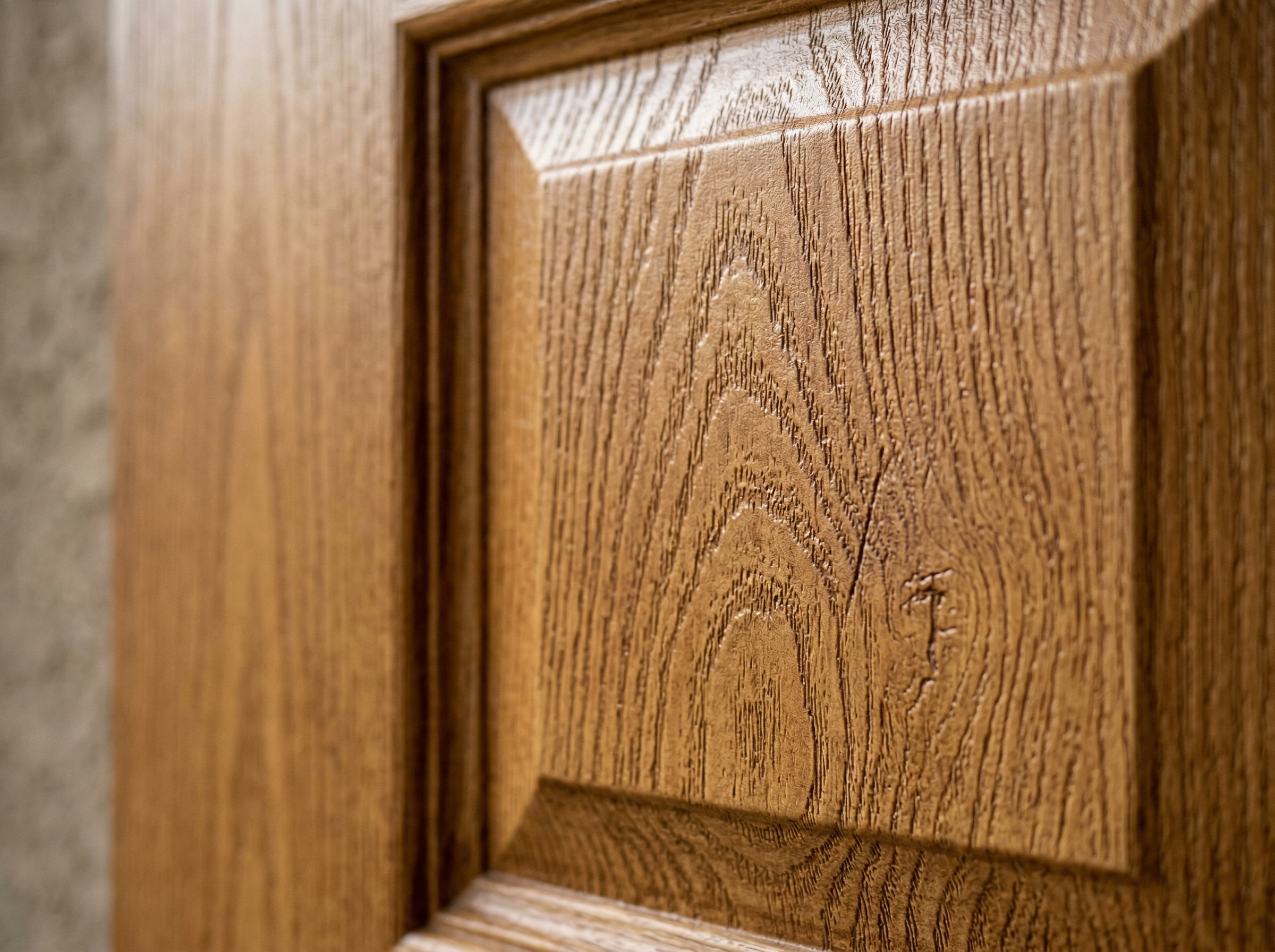
A fiberglass door has two molded fiberglass-reinforced composite skins over a foam core, similar to steel construction, but the skin is fiberglass instead of metal. The skin is molded with a true wood-grain texture and stained or painted. Premium fiberglass doors come pre-stained at the factory in a range of wood-look finishes.
Strengths
Very high R-value for an entry door (R-7 to R-9 for the slab depending on the brand). No thermal bridge like steel. Will not dent, rot, warp, split, or rust. The molded wood grain looks genuinely like real wood from a few feet away, and stained finishes hold up for 15 to 20 years before they need refreshing. Most premium fiberglass doors come with 25 to 30 year warranties on the slab. Excellent fit and air seal because the construction is dimensionally stable across temperature swings.
Weaknesses
More expensive than steel. The lowest-end fiberglass doors are not much better than mid-grade steel and are not worth the premium. To get the real benefit you need a mid-tier or premium door, and the cost adds up quickly with decorative glass options. The molded grain is convincing but not identical to real wood up close.
2026 GTA cost
$900 to $3,500 supplied. Lower end is a basic stained slab. Higher end is a premium model with decorative glass, sidelites, and a transom. Installation $400 to $800.
Wood entry doors
What they are
A solid wood door is exactly that: a slab built up from real lumber, often a stile-and-rail construction with raised panels. Premium wood doors use mahogany, oak, walnut, or alder. Custom carved and stained wood front doors are still the showpiece option for high-end Toronto homes.
Strengths
The aesthetic. Nothing else looks or feels like real wood. Custom shapes, sizes, carvings, and stain options are essentially unlimited. Excellent for heritage homes and architectural showpieces where curb appeal is the priority.
Weaknesses
Wood swells in humidity and shrinks in dry cold. A wood front door in the GTA will move with the seasons, and a well-fit door in October may stick in July. Sun exposure fades and degrades the finish, requiring sanding and re-staining every 3 to 5 years on a south-facing entry. Real wood is heavier than steel or fiberglass, so it stresses the hinges and frame. R-value is lower than fiberglass (around R-4 to R-5 for a 1 3/4 inch solid door). Most importantly, wood requires real maintenance, and homeowners who skip the maintenance end up with a degraded door after 10 years.
2026 GTA cost
$1,500 to $8,000 supplied for a quality solid wood door. Custom commissioned doors run higher. Installation $500 to $1,000 because of weight and frame work.
Energy efficiency: ENERGY STAR ratings
ENERGY STAR Canada ratings for entry doors look at the whole assembly (slab, frame, weatherstripping, glass if any). For a typical GTA home in climate zone 6, look for an Energy Rating (ER) of 25 or higher. Realistic ER ranges by material:
- Steel: ER 25 to 35 for a basic slab, lower with decorative glass.
- Fiberglass: ER 30 to 45 depending on brand and glass options.
- Wood: ER 20 to 30 (lower because of higher conductivity and larger seasonal movement).
Fiberglass usually wins on ER. Steel is competitive on the basic models. Wood is the lowest on a per-dollar basis.
Which one we actually recommend for a GTA home in 2026
For 80 percent of homeowners, a mid-tier fiberglass door with a stained finish and the right glass option is the right answer. It costs more than steel up front, but you save on heating, you get 25-plus years of service without dents or repainting, and the curb appeal is excellent. For homeowners on a tight budget, a quality steel door from a reputable manufacturer is fine, especially for a north-facing entry that does not get sun exposure. For heritage homes, custom architectural projects, or homeowners who genuinely enjoy maintaining their property, real wood is still the right choice.
Frequently asked questions
Will a fiberglass door look obviously fake?
From the curb, no. The molded wood grain on a quality fiberglass door is convincing enough that most visitors cannot tell. Up close at arm’s length, you can see that the grain repeats in a pattern, which real wood does not. Most homeowners stop noticing after a few weeks.
Can I paint a fiberglass door?
Yes. Fiberglass holds paint very well. The factory finish is more durable, but you can repaint with a quality exterior acrylic if you want to change the colour later.
How long do steel doors really last?
The slab will last 20 to 30 years structurally. The painted finish typically needs refreshing or repainting at the 8 to 12 year mark, especially on south-facing doors. Watch for rust at the bottom edge where snow and salt sit.
Are wood doors really that much work?
Yes. Plan for sanding and re-staining every 3 to 5 years on a sun-exposed door. Plan for tightening hinges and adjusting the strike at the start of each summer when humidity makes the door swell. Plan for full refinishing every 10 years.
What about composite doors that mix materials?
Some manufacturers sell hybrid doors with a fiberglass face over a wood edge or wood door with a steel core. These exist mostly to solve specific problems (heavier door for impact resistance, custom width on a heritage frame). For a typical GTA front door, stick with one of the three main materials.
Get a real comparison on your front door before you decide
Luma Doors carries steel, fiberglass, and a curated selection of solid wood entry doors for the GTA. We bring samples to your in-home estimate so you can see and feel the difference before you commit to a material. request a free in-home estimate and we will help you pick the door that actually fits your home, your budget, and your maintenance preferences.

Written by
Priya A.
Door Materials & Manufacturing Specialist
Priya specializes in the manufacturing standards and material science of fiberglass and steel door systems. She focuses on the technical differences in core construction, foam density, and finish durability, providing resources to help consumers understand material longevity without industry jargon.