 Made in Canada
 Order Status
 Doors
Doors Windows
 (905) 303-0560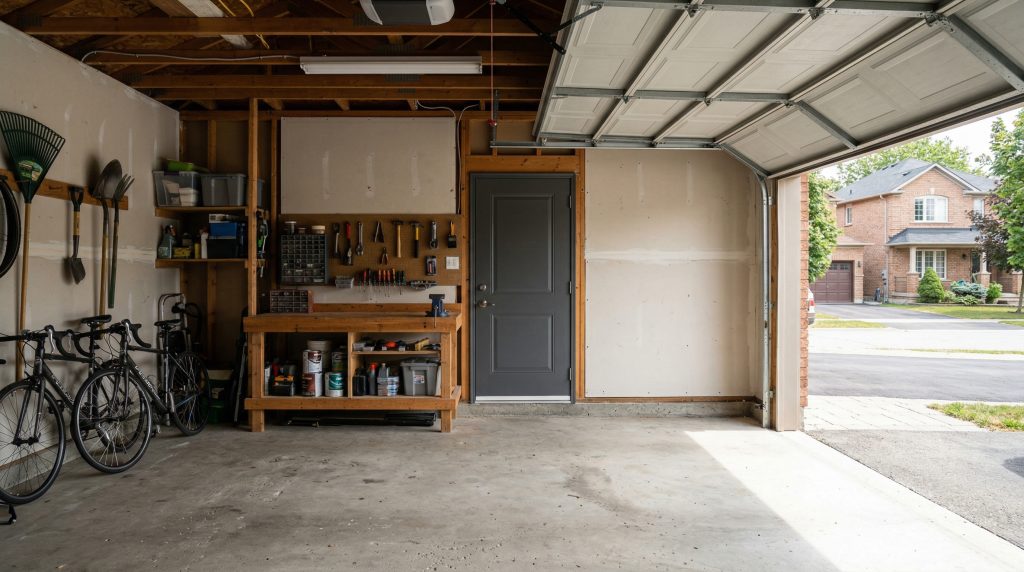
The door between your attached garage and your house is the single most regulated entry door in your home, and most GTA homeowners have never thought about it. The Ontario Building Code treats that door as a fire barrier, not a regular interior door, and the rules are stricter than many homeowners realize. If your house was built before 2006 or has been renovated by previous owners, there is a real chance the current door does not meet code. Here is what the regulation actually requires, what compliant doors look like, and when you should plan a entry door installation on the garage side of your home.
Why the garage door matters as a fire barrier
An attached garage is a high-risk fire space inside your home. It stores gasoline, oil, paint, lithium batteries, lawn equipment, and increasingly, electric vehicles charging at high amperage overnight. Statistically, garage fires are one of the most dangerous categories of residential fires because they often start while the family is asleep. The door from the garage into the house is the line of defence that determines how much time you have to evacuate. The Ontario Building Code requires that door to slow a fire down long enough for occupants to get out and for the fire department to arrive.
What the Ontario Building Code says
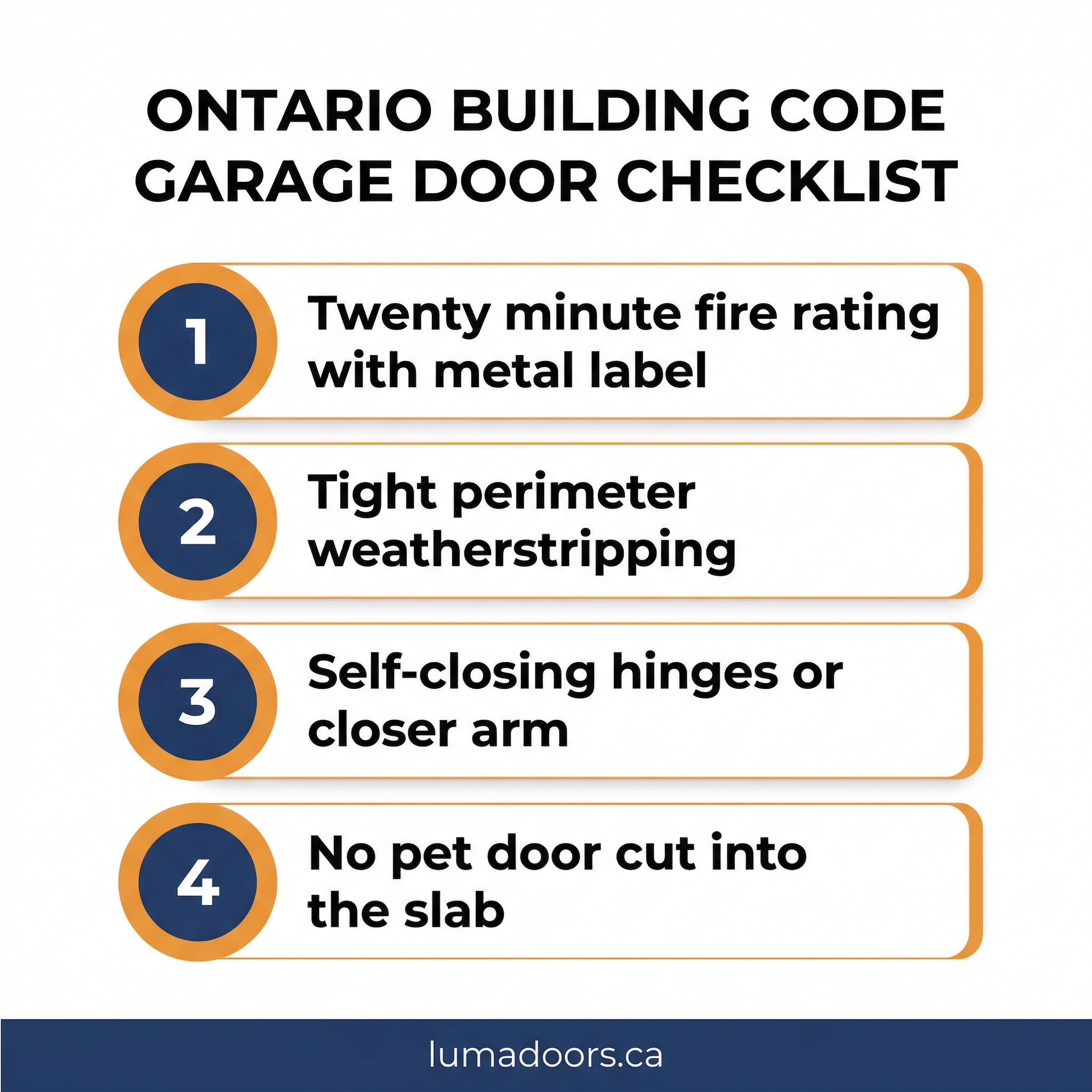
Under the current Ontario Building Code, doors separating an attached garage from a dwelling unit must meet four specific requirements. They must:
- Have a 20 minute fire-protection rating. The door assembly (door, frame, hinges, hardware) must hold back fire for at least 20 minutes when tested under standardized fire conditions.
- Be tight-fitting and weatherstripped. Gaps around the door allow smoke and carbon monoxide to leak through long before flame does. The weatherstripping is part of the fire-protection assembly, not a comfort feature.
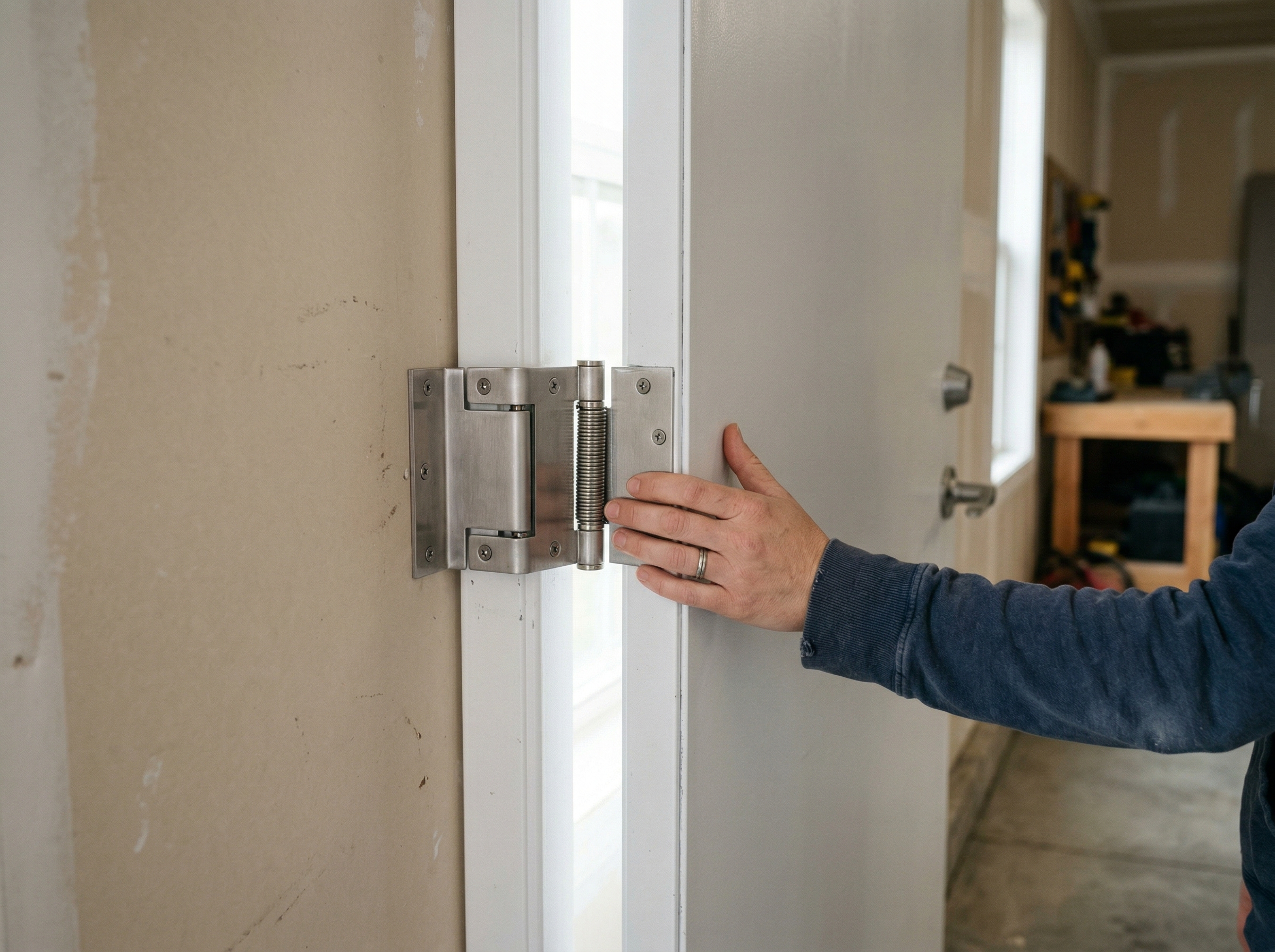
- Be self-closing. The door must close by itself if left open. Spring hinges or a closer arm are both acceptable. A door propped open with a wedge does not meet code.
- Not include a doggy door, cat flap, or pet opening. Any cut into the door breaks the fire rating. Aftermarket pet doors installed by previous owners are a common code violation.
The same requirements appear in the National Building Code and have been part of Ontario regulations for decades. The current code makes them more explicit and adds requirements around carbon monoxide alarms in adjacent rooms.
How to tell if your garage door is compliant
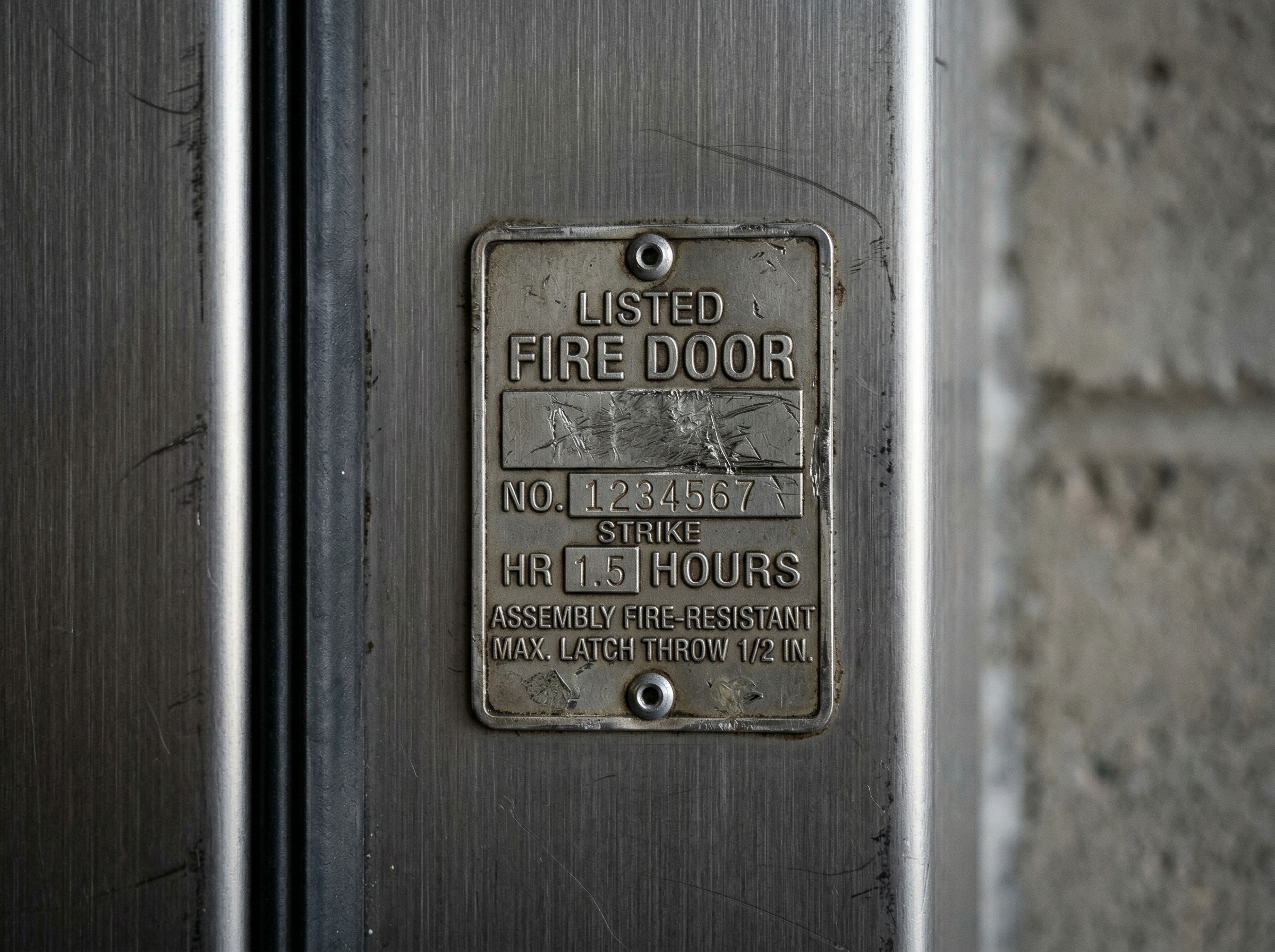
Compliant fire-rated doors carry a permanent metal label on the hinge edge or top of the door identifying the manufacturer, the fire-protection rating (usually marked as 20-Minute, 45-Minute, or 60-Minute), and the testing standard. If you cannot find a label, the door is almost certainly not rated. Common signs the door is not compliant:
- It is a regular six-panel hollow-core interior door.
- It has decorative glass cutouts or panels (most rated 20 minute doors do not include glass at all, and any glass must be wired or ceramic safety glass).
- There is a pet door cut into it.
- It does not close by itself when left open at a 45 degree angle.
- The weatherstripping is missing, ripped, or compressed flat.
- You can see daylight under the door from inside the garage.
If any of those apply, your door is not meeting the spirit or the letter of the code. It may have been compliant when installed and degraded over time, or it may never have been compliant at all.
What a compliant door actually looks like
Most fire-rated garage entry doors are solid steel or solid mineral-core construction. They are heavier than a typical interior door (often 60 to 90 pounds for a single panel) because the core is what gives them the fire rating. The frame must also be rated, which means a steel frame or a wood frame specifically tested as part of an assembly. The hinges are usually three heavy-duty hinges, and the door includes intumescent seals around the perimeter that swell when exposed to heat to seal the gap. Self-closing comes from spring hinges or a small overhead closer.
A compliant 20 minute fire door looks similar to a regular six-panel steel door from the outside, which is why people miss the difference. The label is the only reliable visual indicator.
Cost of replacing a non-compliant garage entry door in the GTA
Realistic 2026 GTA pricing for a labelled 20 minute fire-rated steel door, including the rated frame, weatherstripping, three heavy-duty hinges, self-closing hardware, and standard installation:
- Door slab only (no frame replacement): $400 to $700 for the labelled steel slab.
- Door and rated frame: $700 to $1,400 depending on size and finish.
- Standard installation: $300 to $600 including disposal, leveling, weatherstrip set, and self-closing hinge upgrade.
- Total replacement on a typical attached garage door: $1,000 to $2,000 supplied and installed.
This is not the place to economize. The price difference between a labelled fire door and a non-rated steel door is small compared to what is at stake.
When the door is part of a larger renovation
If you are doing a basement finish, kitchen reno, or any work that requires a building permit and the garage entry door is in the affected area, the inspector will check it. A non-compliant door is a common reason inspections fail and have to be redone. If you know you have a non-rated door and you are planning any major renovation, replace the door as part of the project rather than getting flagged at inspection.
What about carbon monoxide and the rest of the safety system
The fire door is one part of a layered safety system. The Ontario Building Code also requires a carbon monoxide alarm in any room adjacent to the garage (typically the room directly inside the garage entry door) and connected smoke alarms throughout the home. If you are upgrading the door, check those alarms at the same time. A garage fire often produces dangerous levels of CO long before the door fails.
Frequently asked questions
Does my detached garage door need to be fire-rated?
No. The fire-rating requirement only applies to attached garages where the garage shares a wall with the dwelling unit. A standalone detached garage with no connecting door does not need a rated entry door.
Can I add weatherstripping and self-closing hinges to my existing non-rated door to make it compliant?
No. The fire rating comes from the door slab construction itself, not from the hardware. Adding weatherstripping to a hollow-core interior door does not make it a 20 minute fire door. Only a labelled rated assembly meets the code.
What if I have a pet door installed in the garage entry door?
The pet door breaks the fire rating. To restore compliance, you have to remove the pet door, fill the opening, and either get the assembly recertified (rare) or replace the door slab. Most homeowners replace the slab.
How long does a fire-rated door actually last?
The door slab itself can last 20 to 30 years in normal use. The weatherstripping and self-closing hardware are the parts that wear out first. Replace the weatherstripping every 5 to 10 years and check the closer or spring hinges for proper operation annually.
Will my home insurance cover damage if my garage entry door is not compliant?
This depends on your policy. Some Ontario insurers have denied claims where a non-compliant fire door contributed to the fire spreading into the home. It is worth checking your policy and confirming the door meets current code, especially if you have done any renovation that should have triggered an inspection.
Replace your garage entry door before the next inspection or the next mistake
Luma Doors supplies and installs labelled 20 minute fire-rated steel garage entry doors across the GTA. We replace the slab, the frame, the weatherstripping, and the self-closing hardware as a complete rated assembly. request a free in-home estimate and we will walk through your existing door, check the label, and quote a code-compliant replacement if needed.