Are Cheap Exterior Doors Ever a Good Investment? A Buyer’s Guide
09 May
Cheap exterior doors are sometimes worth it, but almost never on the front of the house. The math is simple. A builder grade exterior door costs less to buy and more to live with. Heat losses, weatherstripping that fails after two winters, and earlier replacement add up. If you are weighing a low-cost door for a high-traffic entry, you owe yourself an honest accounting before you swipe the card. Start with our front door installation page to see what the full job looks like and what the spec sheet should include.
This guide walks through where the cuts happen, where they hurt, and the few cases where a budget door is the right answer. By the end you should know exactly what to ask before you sign anything.
What Actually Makes a Door Cheap
The price gap between a builder grade exterior door and a quality version is real, and it is not a markup. The two products are built differently. The slab is different. The frame is different. The hardware prep is different. Even the warranty is different. When a cheap exterior door costs noticeably less than a comparable mid-range product, that gap reflects engineering decisions, not retail margin.
Material is the easiest place to start. A steel slab can be 20-gauge or 24-gauge. A fiberglass slab can have a polyurethane core or a polystyrene core. The difference in insulation between those two cores is significant. ENERGY STAR Canada’s certification criteria for doors call out U-factor and Energy Rating values that simply cannot be hit with the lower-end builds.
Did You Know?
A polystyrene-core fiberglass door has roughly half the thermal resistance of a polyurethane-core door of the same thickness. From the finished face you cannot tell which one you are looking at. The R-value difference shows up on the bill, not the surface.
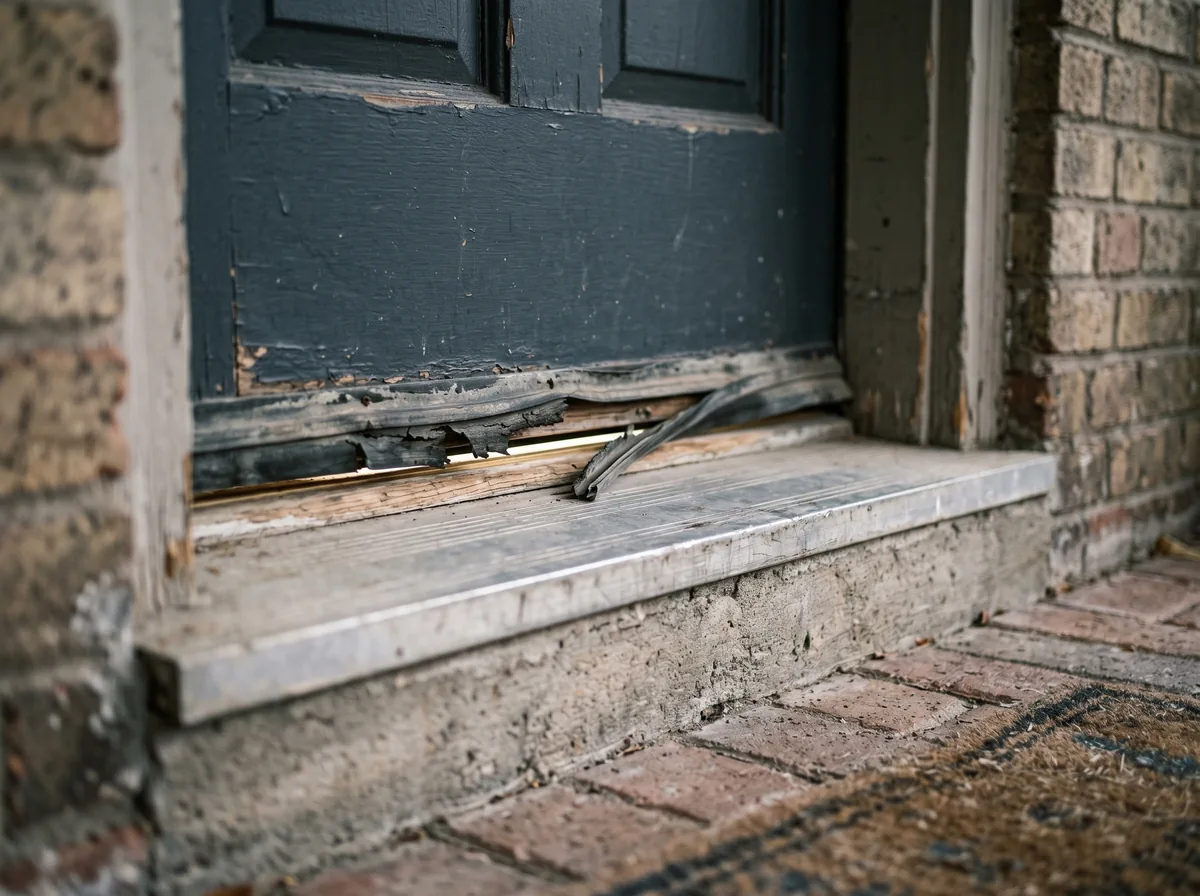
The first place a cheap exterior door fails is the seal. Foam strips compress and never recover.
Where the Cost Is Cut and Why It Matters
The cuts on a builder grade product are predictable. Once you know where to look, you can spot a low-cost exterior door from across the showroom.
The weatherstripping. Quality entry doors use a magnetic seal or a compression bulb that compresses cleanly and recovers shape. Builder grade doors use a foam strip with adhesive backing. The foam strip works for one season. By winter two it is flattened. By winter three it is peeling.
The threshold. An adjustable threshold can be tuned with a screwdriver as the home settles or the slab moves. Fixed thresholds are common on cheap exterior doors and they leave you with whatever gap the original install produced.
The hinges. Heavy-duty hinges with a long screw into the framing transfer the door’s weight to the wall. Light-gauge hinges with short screws transfer that weight only to the jamb. Over time the lighter setup sags and the door drags on the threshold, which is when homeowners start noticing drafts that were not there at install.
The lock prep. Cheap exterior doors are bored for entry-grade hardware. Quality doors are bored for ANSI Grade 1 or Grade 2 deadbolts and reinforced strike plates. You can put a good lock on a cheap door, but the door body and the strike plate will be the weak points, not the lock.
Pro Tip
If a door spec sheet does not list the U-factor, the Energy Rating, the slab gauge or core material, and the hinge gauge separately, the product is a builder grade box. A real exterior door spec sheet has all four values printed on it.
How to buy doors that do not suck (info-dense episode)
The Real Cost of Cheap Exterior Doors Over a Decade
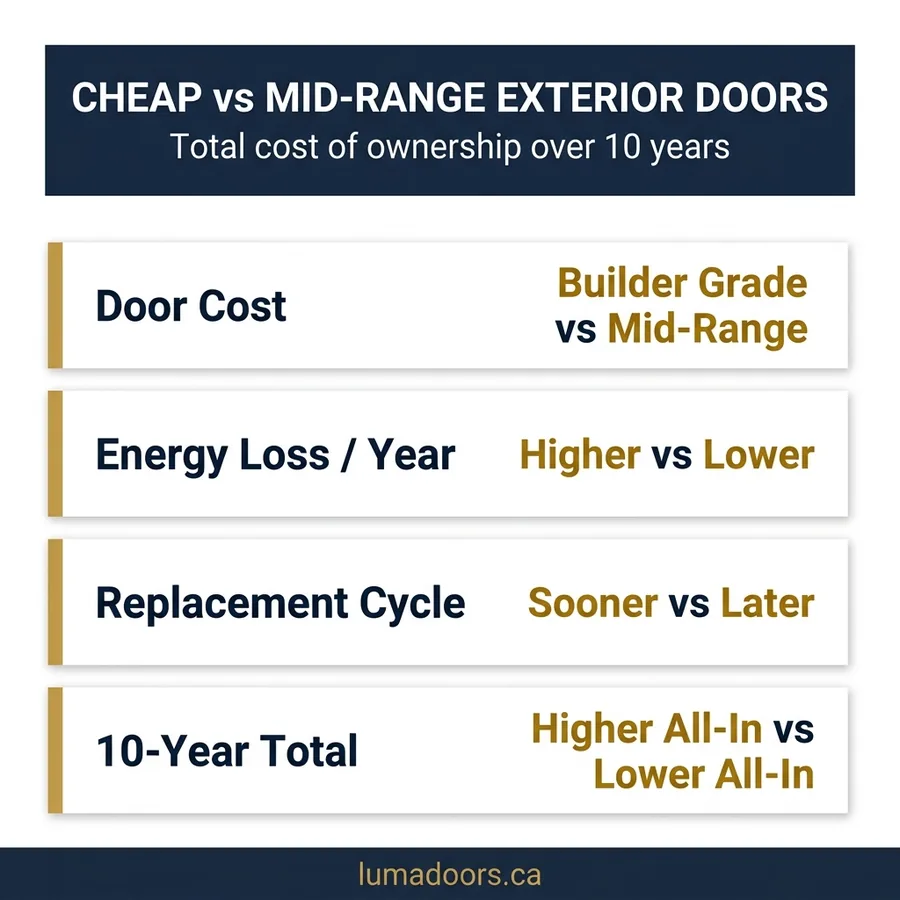
Sticker price is the wrong number to compare. The right number is total cost of ownership over the time you plan to live in the home. Across a decade, a cheap exterior door costs you in three places at once: the door itself, the energy it lets through, and the replacement cycle.
The 10-year math: where the difference between cheap and mid-range exterior doors actually shows up.
Energy losses are the single largest hidden cost. A door with a U-factor of 0.40 leaks heat at roughly twice the rate of a door with a U-factor of 0.20. Across the heating season in southern Ontario, that adds up to noticeable winter heating costs that recur every year.
When a Cheap Exterior Door Is Genuinely a Smart Buy
Some exterior doors do not need to be premium products. The decision is about location and use, not about ego.
A garage-to-house pass door. Many Canadian homes have an interior door from the garage into the home. It is technically an exterior door and code requires fire-rated steel, but it does not face weather. A solid mid-grade fire-rated steel door is plenty.
A side door to an unheated outbuilding. The shed door, the workshop door, the detached garage entry. None of these face the same demands as a primary residential entrance. A simple steel slab is fine.
A short-term rental flip where the budget is tight. If you are turning a home for resale and the existing front door is functional but ugly, sometimes the right call is to paint it well rather than replace it with a builder grade door that the next owner will pull out anyway.
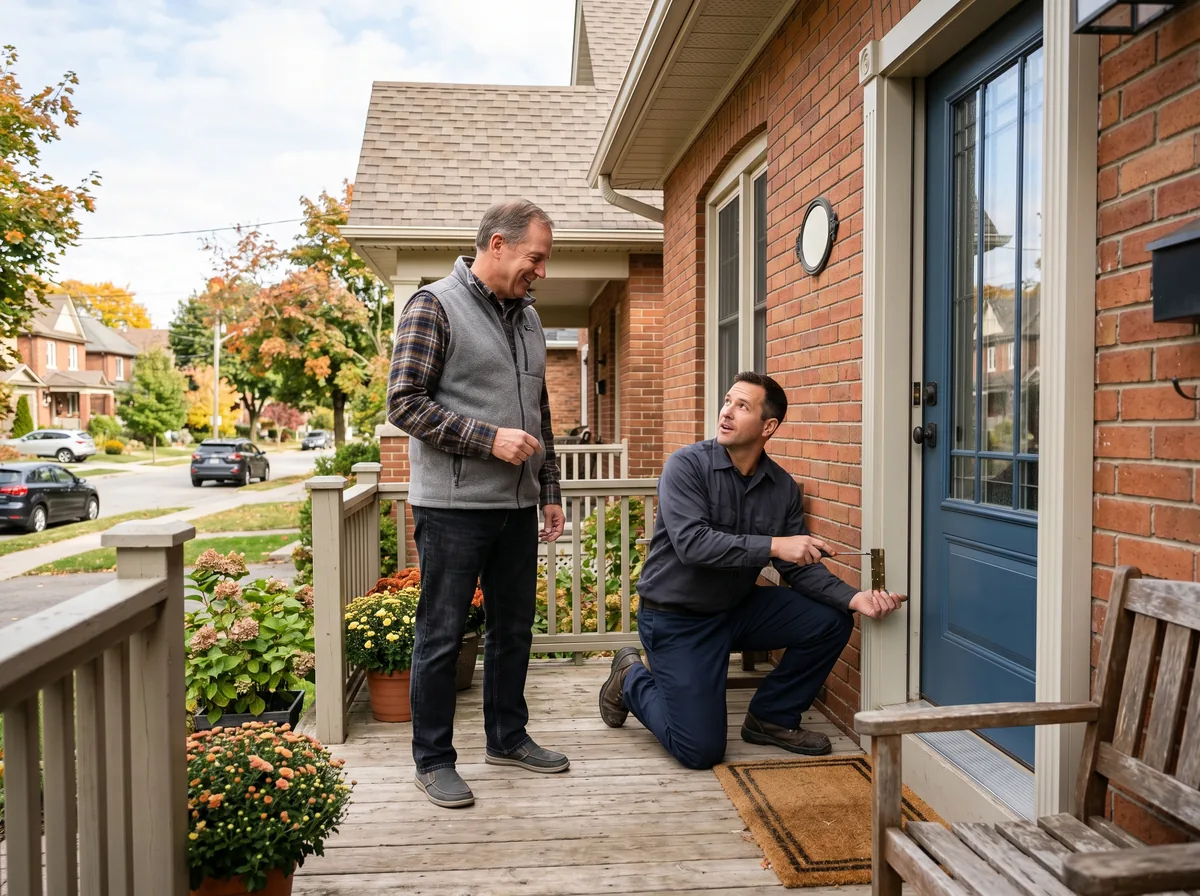
The honest answer comes from someone who installs both ends of the market.
Save Your Money
Before replacing any front entry, run a flame test along the perimeter on a windy day with the door closed. If the flame moves, the seal is the issue, not the slab. New weatherstripping and a threshold adjustment can buy you years on a door that otherwise looks fine.
How to Tell the Difference Before You Buy
Spec sheets do not lie. A builder grade exterior door comes with a thin sheet that lists slab dimensions and a model number. A quality exterior door spec sheet lists the slab gauge or core material, the U-factor, the Energy Rating, the certified weatherstripping, the hinge gauge, the threshold type, and the hardware prep. If you see four numbers on the page, you are looking at a real product. If you see two numbers, you are looking at a price-point box.
Ask to see the door installed somewhere. Reputable dealers have showroom samples or recent install photos. Look at how the slab fits in the frame. Look at how the weatherstripping presents. Compare it side by side with a higher-end door from the same manufacturer if available. The visual difference is obvious within five seconds when you see them next to each other.
Pull the warranty page. A clear warranty separates coverage on the slab, the glass, the paint, the weatherstripping, and the labour. A blanket “lifetime” claim with no detail is a red flag. The fine print is where the real coverage lives.
If you are weighing options for your own home, the exterior doors for sale overview shows the spec range we work with. For specifics on the two leading materials, the fiberglass front doors for sale selection compares well against builder grade steel on energy performance.
Take the Checklist with You
Download our 10-point buyer’s checklist before your next showroom visit or in-home consultation. It covers the spec lines that separate a value buy from a regret.
Disclaimer. This article is for general guidance only. Specifications, products, and pricing change. Luma Doors is not liable for outcomes from actions taken based on this content. Confirm fit, certification, and warranty terms with a qualified door specialist for your specific home and opening.
Are cheap exterior doors ever worth it for a primary front entry?+
Rarely. The primary front entry is the highest-traffic, most weather-exposed door on a home. A cheap exterior door on this opening fails at the seal first, then loses its finish, then sags on the hinges. Across ten years the cumulative cost of replacements, energy loss, and security upgrades wipes out the upfront savings. The exception is a flip where the new owner will replace the door anyway. For a home you plan to live in, spend on the front door once and choose the right product.
How long does a builder grade exterior door actually last?+
The slab itself can last twelve to fifteen years. The seal and hardware around it usually need attention well before that. Weatherstripping on a foam-strip system fails by year three. The threshold sweep flattens by year five. The finish on direct-sun exposures starts looking tired by year seven. By the time a homeowner notices drafts and decides to replace the whole assembly, the underlying slab might still be sound. The components around it determined the lifespan, not the door body.
Can I upgrade a cheap exterior door instead of replacing it?+
Yes, up to a point. New weatherstripping, an adjustable threshold retrofit, fresh exterior paint, and a Grade 1 or 2 deadbolt with a reinforced strike plate can extend the useful life of a builder grade exterior door by several years. What you cannot upgrade is the slab itself. If the core is polystyrene, the U-factor stays where it is. If the slab is sagging because the hinges are undersized, no amount of weatherstripping will close the gap. Use upgrades to buy time, not to substitute for a real door.
What is the single most important spec to check on an exterior door?+
The U-factor. It tells you how much heat passes through the door. A door with a U-factor of 0.20 keeps roughly twice as much heat inside compared to a door with a U-factor of 0.40. ENERGY STAR certified doors print this number on the spec sheet and the certification label. If the spec sheet is silent on U-factor, you are looking at a builder grade product where the manufacturer would rather not call attention to the energy performance.
Does a cheap exterior door affect home insurance or resale value?+
Insurance, rarely. Resale, yes. Real estate agents and home inspectors notice front doors. A worn builder grade door, a sagging slab, a peeling finish, and visible weather damage all read as deferred maintenance. Buyers extrapolate. A tired front door tells them what other things in the home might be tired. A solid, well-installed entry signals the opposite. The front door is not just hardware. It is the first impression a buyer forms before they cross the threshold.
Luma Doors works with homeowners across the GTA on entry replacements that need to last. If you are considering a new front door, we can walk through the spec sheet with you and identify where to invest and where to save. Book a free in-home estimate and we will bring sample spec sheets to your kitchen table.
Hanna specializes in the technical interpretation of ENERGY STAR ratings, U-factors, and ER values for GTA homeowners. She focuses on building science principles and Canadian climate zone requirements, providing factual resources on fenestration efficiency and energy performance standards.
 Made in Canada
 Order Status
 Doors
Doors Windows
 (905) 303-0560