 Made in Canada
 Order Status
 Doors
Doors Windows
 (905) 303-0560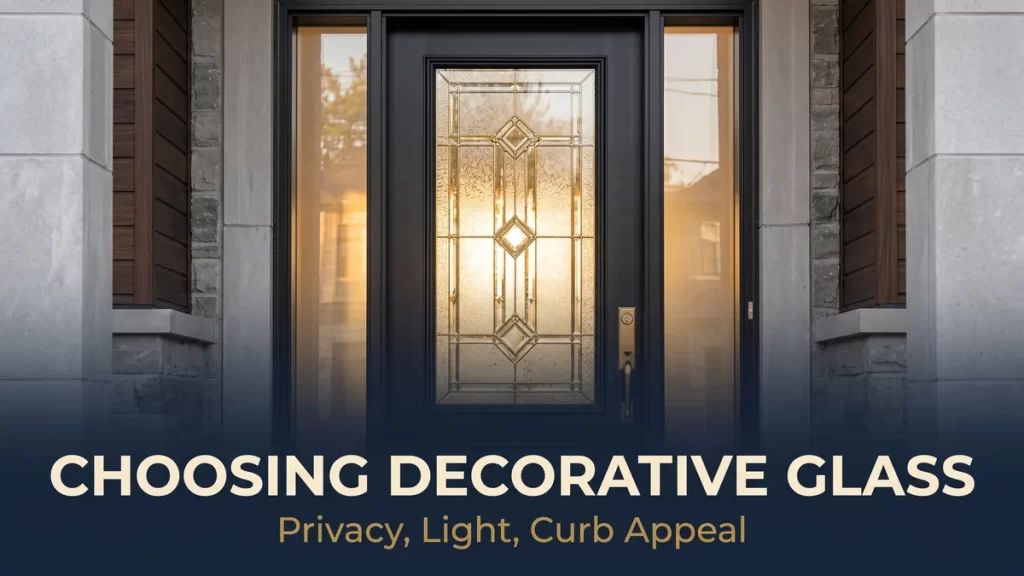
Picture the front entry of a Canadian home in late afternoon. The sun has dropped low. Light moves through the glass and falls in soft patterns onto the entry tile. The right decorative glass for front door applications turns that ordinary moment into a piece of architecture. The wrong glass turns it into a privacy problem or a black hole that swallows daylight. Choosing well is one of the highest-impact decisions in a front door installation project, and one of the easiest to get wrong if you skip the questions that matter.
This guide covers what to weigh, in the order homeowners actually face the decisions. By the end you will know how to specify the glass that fits your home, your facade, and the way you live behind your front door.
Quick Take
If you want a one-line answer: clear glass for setbacks with landscaping and north exposure. Frosted or textured glass for streetside entries. Leaded or stained glass when the architecture supports it and the home is set back. Anything else is a compromise on either privacy or light.
Why the Glass Decision Matters More Than You Think
The slab of an entry door defines the structural choice. The glass defines the experience. From the inside, the glass is the only part of the door you actually look at. From the outside, the glass is what neighbours and arriving guests see first. Decorative glass for front door openings is the most visible piece of design hardware on the home and one of the most personal.
The decision also touches three things that homeowners care about, often at once: how much daylight reaches the entry, how much of the entry is visible from outside, and how the front facade reads from the curb. These three pull in different directions. More glass means more light and less privacy. Heavier patterns mean more privacy and less light. The right answer depends on which side of the home faces the street and how the front yard is composed.
Privacy and Light: The Two Levers
Every glass choice trades off privacy and light. Once you understand where you fall on that line, the rest of the decisions become straightforward.
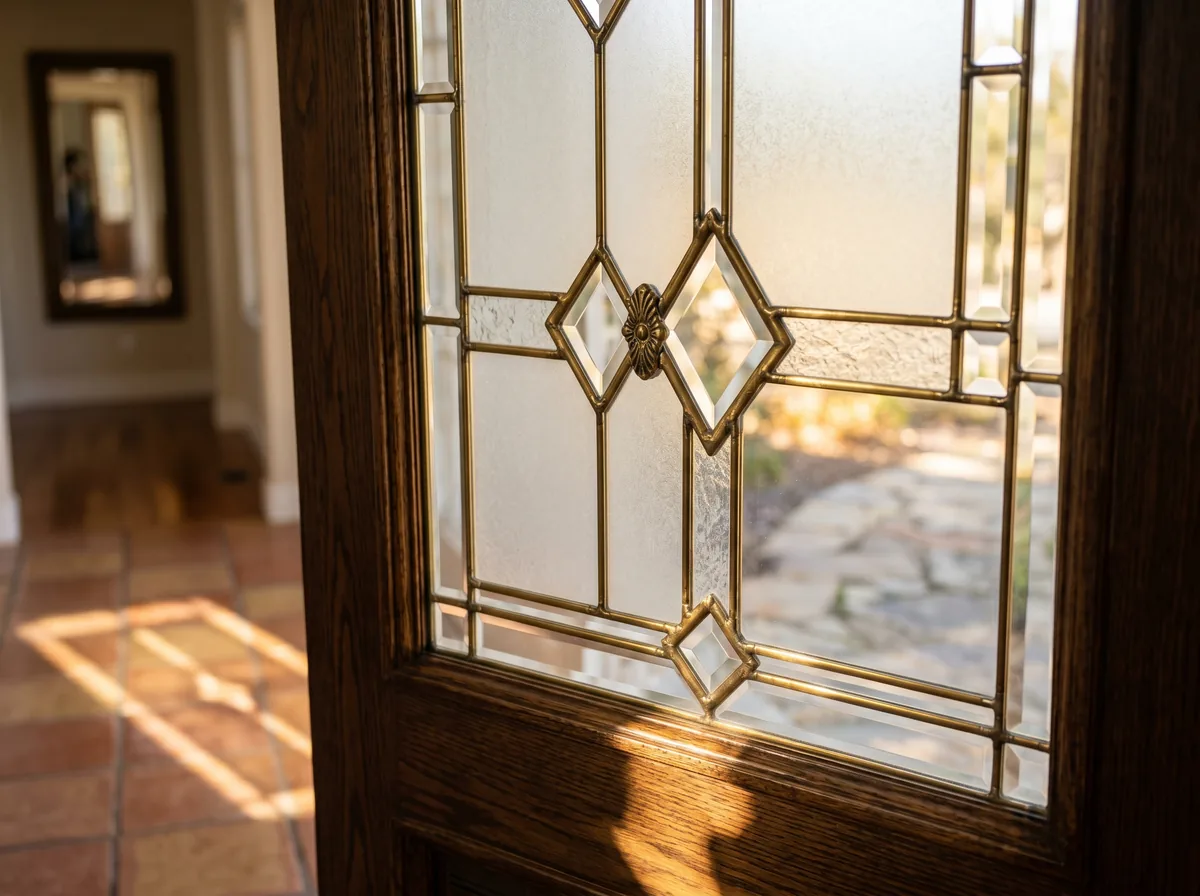
Light transmission is roughly proportional to how clear the glass is. Clear glass passes most of the available daylight. Frosted glass passes daylight as diffuse glow. Leaded patterns pass daylight unevenly because the leading itself blocks light. Stained glass passes coloured light. The amount of useful brightness in your entry can drop noticeably between clear and heavy decorative.
Privacy is roughly inverse to light transmission. Clear glass means anyone on the porch can see in. Frosted and obscure-textured glass distorts shapes enough that an observer outside cannot identify objects inside. Leaded glass with caming and clear panes leaves clear viewing windows in the lead spaces. Heavily textured or fully obscure glass blocks visual identification entirely.
People Often Ask
Does decorative glass affect home security? Modern decorative inserts are typically tempered or laminated, the same as standard entry glass. The decorative pattern itself does not weaken the glass. What matters for security is how the glass is fastened in the door body and the locking hardware on the door, not the pattern of the insert.
The two factors people forget are exposure and time of day. A north-facing front door receives ambient daylight without direct sun. It can take heavier decorative glass without the entry feeling dim, because the light already coming in is soft. A south or west-facing door bakes in afternoon sun. Heavy decorative glass on those exposures cuts harsh glare but also adds heat through the glazing on summer afternoons. Lighter glass plus a porch overhang is often a better composition.
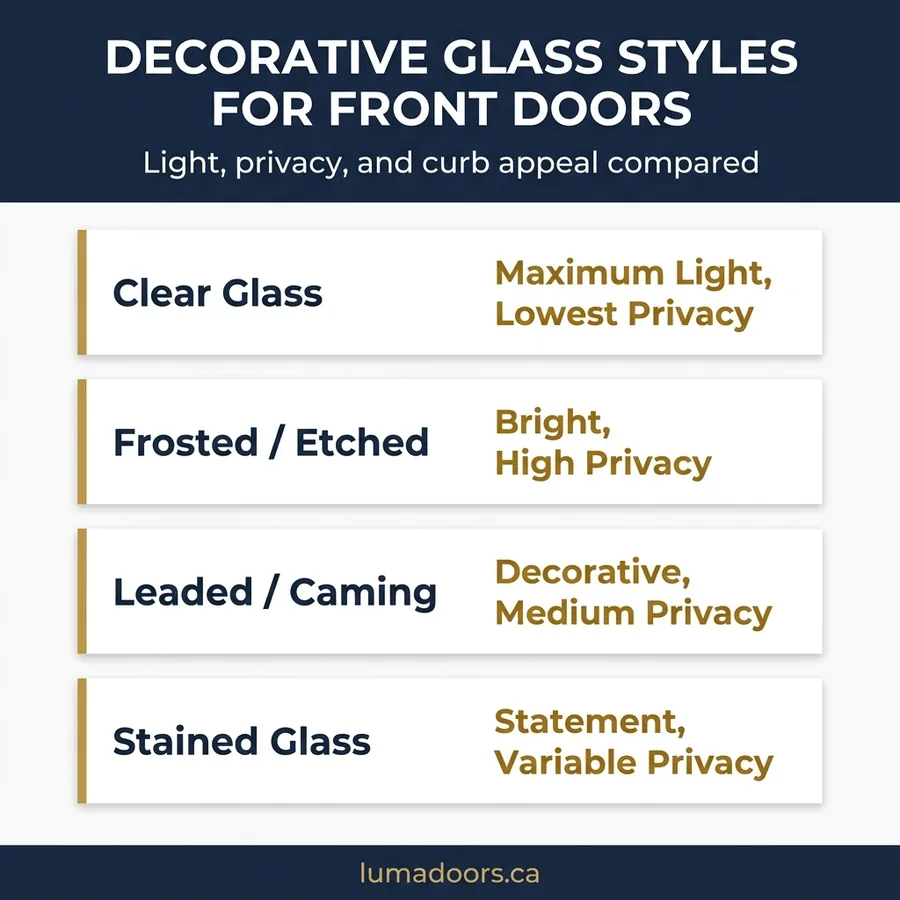
Decorative Glass Styles for Front Doors
Clear Glass
The simplest and brightest choice. Clear glass passes essentially all available light and offers no privacy. It works on homes with deep front-yard setbacks, on porches behind landscaping, and on rear or side entries where streetside privacy is not a concern. Often paired with a hinged interior shade for the rare moments when privacy is wanted.
Frosted and Etched Glass
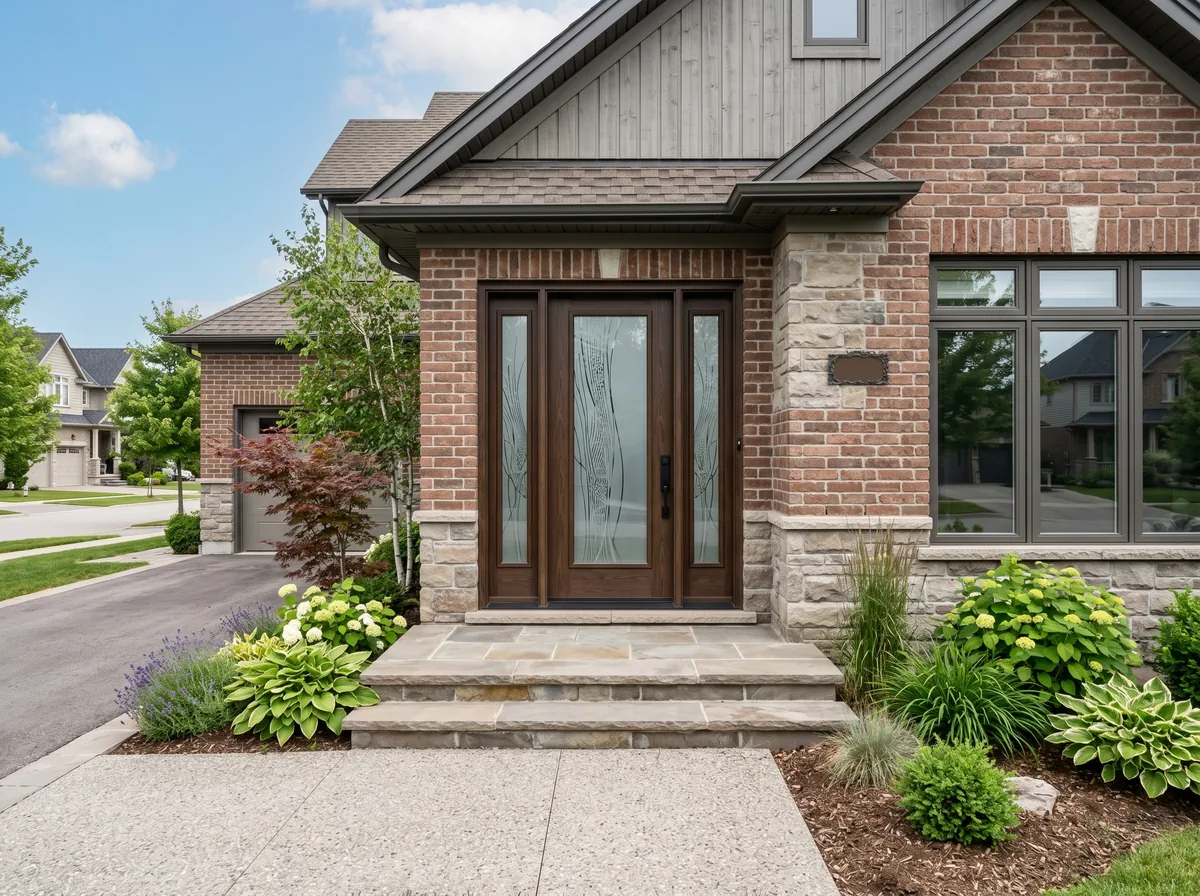
Acid-etched, sandblasted, or texture-cast glass that diffuses incoming light. Maintains brightness in the entry while blocking visual identification from outside. The most versatile choice for streetside front doors. Available in flat textures, patterns, and partially-clear designs that mix frosted areas with clear areas for selective views.
Leaded and Caming Glass
Decorative inserts where strips of metal (the caming) hold individual glass panes in a designed pattern. Brass caming reads warm and traditional. Black and pewter caming reads modern and sharp. Patterns range from minimal geometric grids to elaborate ornamental designs. Privacy depends on whether the panes are clear, frosted, or mixed.
Stained Glass
Coloured glass panes assembled in a designed composition, usually with caming. The most decorative end of the spectrum. Best on homes where the architecture supports it: Victorian, Craftsman, restored century homes, and some heritage districts. On a contemporary home, stained glass can read out of place. Privacy and light are highly variable depending on the design.
Caming, Finish, and Coordinating with the Door
The caming colour and the door finish should agree. A black-painted door with brass caming reads as a deliberate two-tone statement. A black-painted door with black caming reads as quiet and modern. A wood-stained door pairs naturally with brass or warm pewter. White doors take any caming colour cleanly.
If the home has sidelites or a transom, the decorative pattern of the door insert should be the same family across all openings. A leaded geometric pattern on the door and clear glass in the sidelites looks unfinished. Picking the door pattern first and then specifying the same family for the sidelites and transom is the cleaner sequence.
Hardware finish is the third coordinate. Brass caming wants brass or oil-rubbed bronze hardware. Pewter caming wants brushed nickel or matte black. Mixing finishes is doable but requires intent. The default move is to pick caming and hardware in the same finish family. Front doors with sidelites for sale shows several pattern-and-finish pairings worth studying.
Code, Safety, and the Glass Build-Up
Decorative glass in an entry door must still meet impact and safety requirements. The Ontario Building Code requires glazing in entry doors to be tempered, laminated, or otherwise impact-rated. A pure decorative pane that breaks into sharp shards is a code issue and a safety issue.
The other technical question is the insulation glass build-up. Decorative inserts can be single-pane, double-pane, or triple-pane. The decorative element is one face of an insulating glass unit. The glass between the visible face and the back of the door determines the U-factor. A beautiful leaded insert with a single pane behind it performs poorly thermally. The same insert in a double or triple-glazed sealed unit performs as well as a standard ENERGY STAR door.
Pro Tip
Always ask the dealer to confirm the glass build-up in writing. Look for the words “tempered” or “laminated”, and look for the build-up description (single, double, or triple-glazed). The decorative pattern is the visible part. The build-up is the part that determines whether the glass meets code and how the door performs in winter.
How to Choose for Your Specific Home
The decision pattern that works in practice has four steps. Walk them in order. The result is a glass spec that fits the home, not a generic “popular choice” that ignores your context.
Step one: photograph your front entry from the sidewalk. Take the photo at the time of day when the home is most visited. Look at how exposed the entry is. Use the answer to set your privacy floor.
Step two: stand inside the closed door at the same time of day. Notice how much daylight is currently reaching the entry. Decorative glass with heavy patterns will reduce that. Decide how much loss is acceptable.
Step three: pull a wide photo of your home’s facade. Note the architectural style, the door colour, and the trim colour. These set the caming finish and the pattern family.
Step four: ask for samples. Manufacturers and dealers can provide a sample of the glass pattern at hand-held size. Hold it against your existing entry. The decision becomes obvious within thirty seconds when you see the pattern in your own light. Browsing the glass doors for sale selection is a good starting point.
Take the Glass Reference Sheet With You
Download our quick reference guide to decorative glass styles, privacy levels, and how to coordinate with caming and hardware finishes. It is the same one-page sheet our consultants use during in-home consultations.
Download the Glass Reference (PDF)Disclaimer. This article is for general guidance only. Glass options, patterns, and certifications change. Confirm fit, code compliance, and warranty terms with a qualified door specialist for your specific opening. Luma Doors is not liable for outcomes from actions taken based on this content.
Sources and References
- Government of Ontario – Ontario’s Building Code reference for glazing requirements
- Natural Resources Canada – ENERGY STAR guidance for windows, doors, and glass build-up
- Canadian Centre for Housing Technology – Building envelope research from NRC Canada
Frequently Asked Questions
Choosing decorative glass is a design decision dressed up as a hardware decision. If you would like a sample held against your existing entry before you commit, Luma Doors brings glass samples to in-home consultations across the Greater Toronto Area. Book a free in-home estimate and we will walk through the patterns that fit your facade.