 Made in Canada
 Order Status
 Doors
Doors Windows
 (905) 303-0560
You found the perfect entry door, the colour is exactly right, and then you hit the wall every homeowner hits: the hardware aisle. Lever or knob? Handleset or grip? Single cylinder or double? Choosing a front door handle feels like a small decision until you realize it sets the tone for your whole entrance, controls how secure your home is, and has to survive a Toronto winter. Get it right and it feels effortless every day for years. If you want the door and the hardware handled together, our front door installation service covers both.
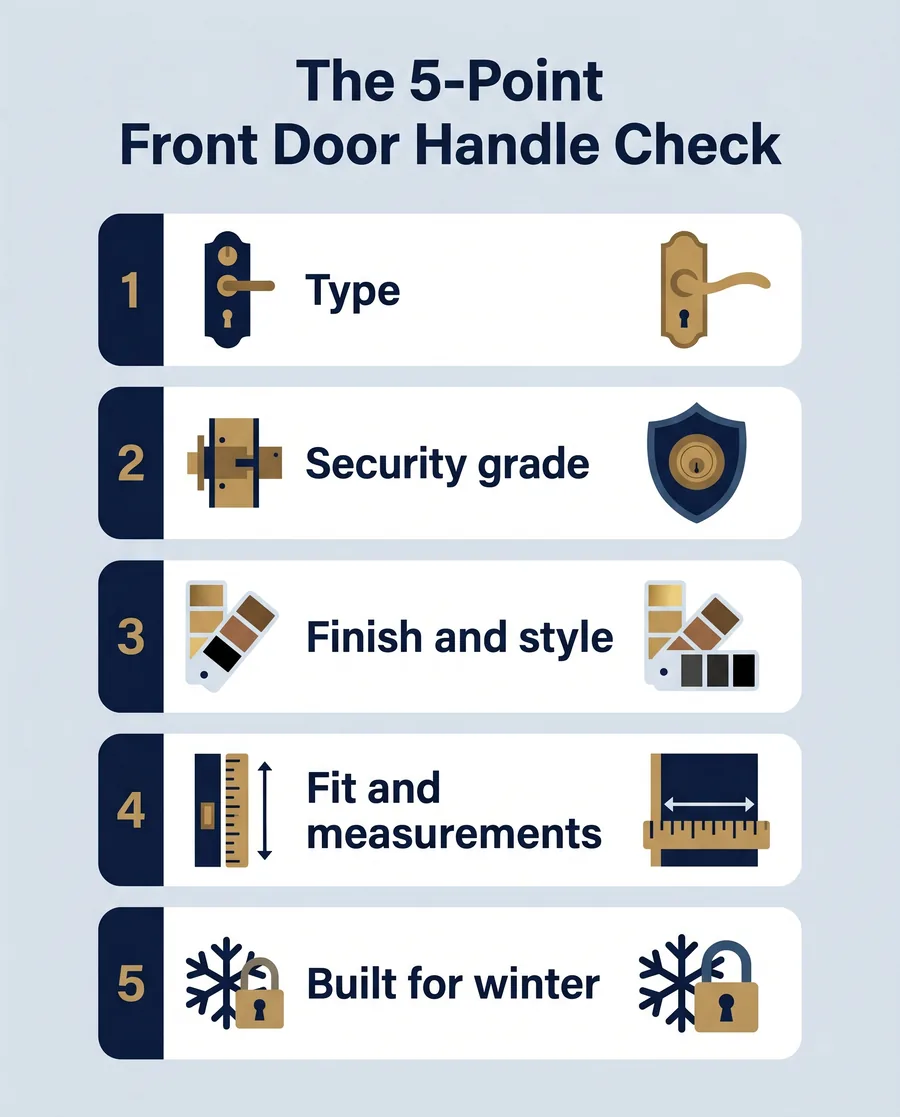
This guide walks through the five things that actually matter when you choose a front door handle: the type, the security grade, the finish, the fit, and how it works in our climate. By the end you will know exactly what to look for before you buy.
In this article
Handle Types: Handleset, Lever, or Knob
Front door hardware comes in three broad shapes, and the right one depends on the look you want and how the door is used every day.
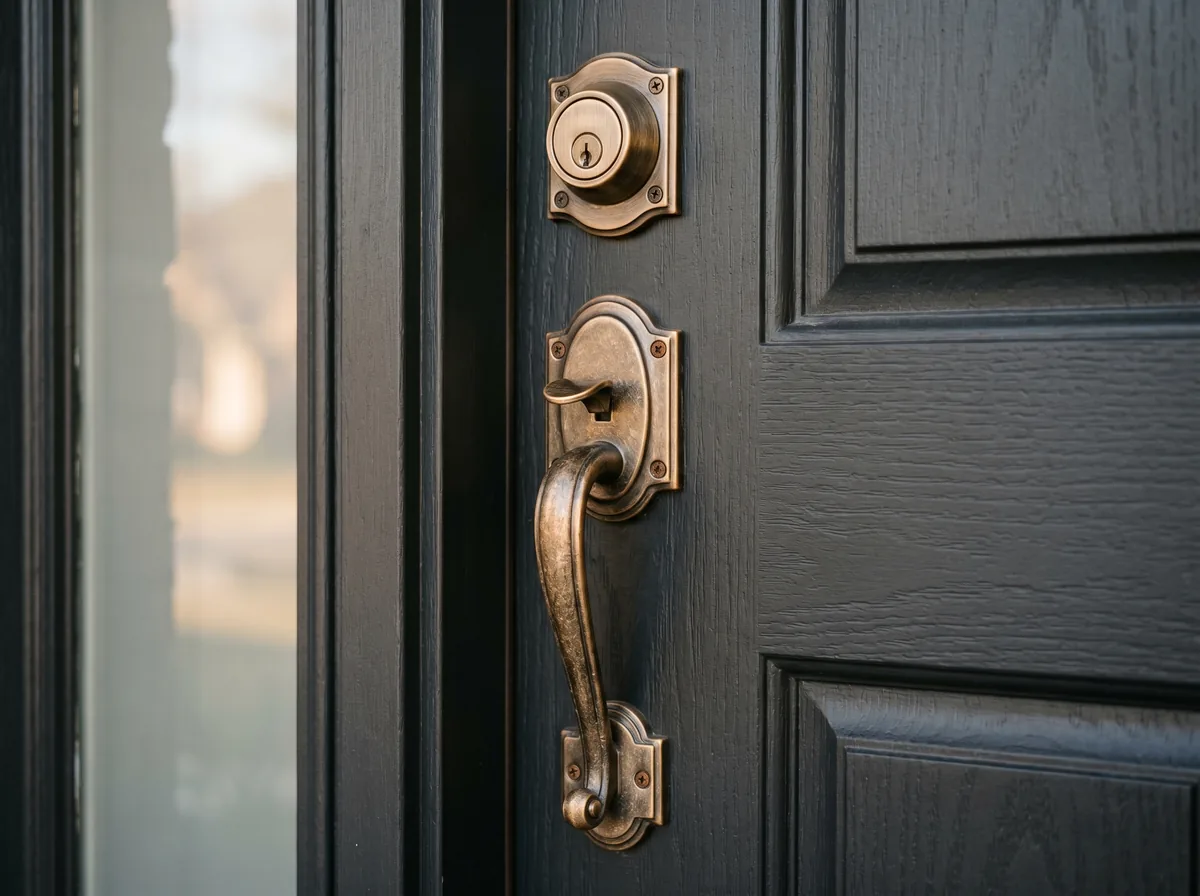
- Handlesets. The classic front-entry choice: a tall decorative plate with a grip handle on the outside, paired with a deadbolt above and a lever or knob on the inside. They make the biggest visual statement and read as the most substantial.
- Levers. Clean, modern, and easy to operate with full hands or limited grip strength, which is why they are popular for accessibility. Make sure an exterior lever is paired with a separate deadbolt for real security.
- Knobs. Traditional and compact, but harder to turn with full hands and generally less secure on their own than a handleset with a dedicated deadbolt.
Whichever shape you choose, the finish and detailing should feel like it belongs with the door. Our overview of entry door hardware for every style shows how each type pairs with different door designs.
Security: Grades, Deadbolts, and Cylinders
Please note: The tips here are for general guidance only. Luma Doors is not responsible for any damage, injury, or cost resulting from action taken based on this content. Door slabs are heavy and exterior openings handle weather sealing and security; if a step calls for lifting a heavy slab, altering a rough opening, or anything you are not fully comfortable with, stop and call a qualified door installer.
A front door handle is also a security device, so this is where I slow homeowners down. Three things decide how much protection your hardware really gives you.
- The grade. Residential hardware is rated by ANSI/BHMA into Grade 1, 2, and 3, with Grade 1 the strongest. For an exterior front door, aim for a Grade 1 or Grade 2 deadbolt rather than the lightest builder-grade option.
- The deadbolt. A lever or knob alone is not enough on a front door. A solid deadbolt with a full one-inch throw is what actually resists a kick-in. Pair every front entry with one.
- The cylinder. A single-cylinder deadbolt uses a key outside and a thumbturn inside. A double-cylinder needs a key on both sides, which adds security on doors with nearby glass but can slow you down in an emergency. Weigh that trade-off carefully.
Did You Know? A Strike Plate Is the Weakest Link
The most expensive lock in the world fails if it is anchored with short screws into thin trim. Upgrade the strike plate with three-inch screws that bite into the wall framing behind the jamb. It is a small change that does more to stop a forced entry than almost any other hardware upgrade, and it costs next to nothing.
If you want layered protection, a multi-point lock spreads the locking force across the top, middle, and bottom of the door. Our look at the benefits of a multi-point locking system explains when it is worth it.
People Often Ask: Are Smart Locks Worth It for a Front Door?
For many homeowners, yes. A good smart lock lets you ditch the hide-a-key, give guests temporary codes, and check whether you actually locked up. The key is buying one rated for exterior use that handles cold without the battery dying, which matters here. We cover what holds up in our guides to smart locks that survive a GTA winter and the broader case for smart locks to improve your front door security.
Finish and Style: Matching Your Door
Once security is sorted, the finish is what people actually notice. The goal is harmony with the door colour, the other exterior metals, and the style of the home.
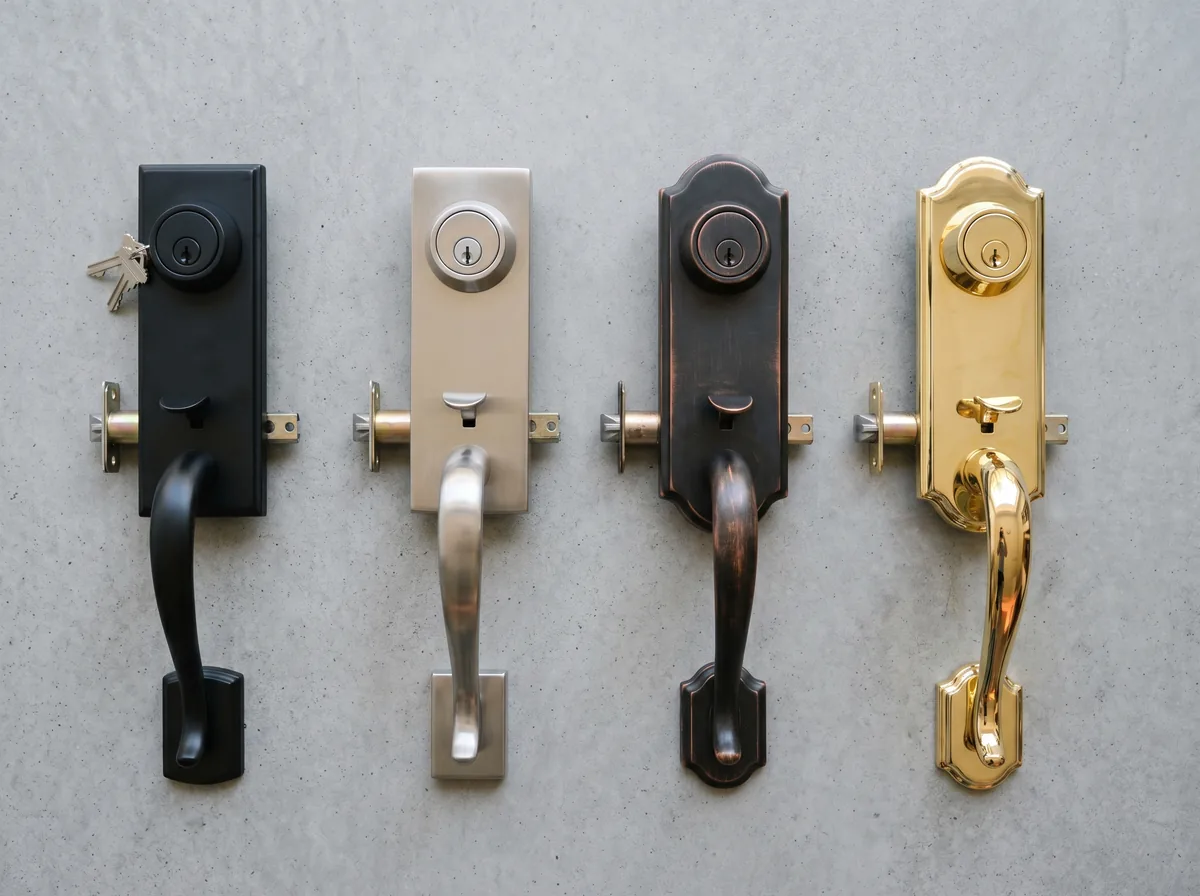
- Matte black. The modern favourite. It pops against light doors and disappears handsomely on dark ones, and it suits contemporary and farmhouse looks alike.
- Satin nickel and brushed chrome. Cool, neutral, and forgiving of fingerprints, which makes them an easy everyday choice.
- Oil-rubbed bronze and brass. Warm and classic, beautiful on traditional and craftsman homes and on rich wood-look doors.
A simple rule keeps things from clashing: pick a finish that matches your door knocker, house numbers, and light fixtures, or deliberately contrasts with all of them. The look you are avoiding is three slightly different metals fighting each other. For where finishes are heading this year, see our entry door trends for 2026.
Getting the Fit and Measurements Right
A handle that does not fit your door is a frustrating return, so check the measurements before you buy. Four numbers do almost all the work.
- Backset. The distance from the door edge to the centre of the bored hole, usually 2 and 3/8 inches or 2 and 3/4 inches. Match it or the handle will not line up.
- Bore hole diameter. Standard prep is a 2 and 1/8 inch hole. Most modern hardware fits it, but confirm for handlesets.
- Door thickness. Standard exterior doors are about 1 and 3/4 inches thick; verify your hardware is rated for it.
- Handing. Some handlesets are handed for left or right doors, so know which way yours swings before you order.
Save Your Money: Buy the Handle and Deadbolt as a Keyed Set
Buying your handleset and deadbolt as a matching, keyed-alike set means one key opens both, the finishes are guaranteed to match, and you usually pay less than buying the pieces separately. Mixing brands or buying piecemeal often leads to two keys, a slight finish mismatch, and a higher total cost. Decide on the full set up front.
Hardware Built for a Toronto Winter
Our climate is hard on exterior hardware. Cold makes cheap metal brittle, road salt and humidity invite corrosion, and a poorly sealed lock can freeze. A few choices make a real difference.
- Solid metal over hollow or plated. Solid forged brass or stainless resists corrosion and cold far better than thin, hollow hardware with a sprayed-on finish.
- A weather-rated finish. Look for finishes warranted against tarnish and corrosion, since salt and freeze-thaw cycles punish a cheap coating quickly.
- Smart locks rated for the cold. If you go smart, confirm the operating temperature range and use quality batteries, because a dead lock in January is no fun.
Hardware is only as good as the door and seal around it. If your entry leaks air, the lock area can frost up, so it is worth pairing good hardware with a door built for our weather. Our guide to the top door materials for security and longevity covers what holds up best here.
What Front Door Hardware Costs in 2026
Pricing note: The figures on this page start at approximate market rates in Toronto and the GTA as of 2026. What you actually pay depends on the door material, size, glass and hardware, and how much prep the opening needs. Always get a written quote or an in-home measure before you commit.
Front door hardware spans a wide range, from basic builder sets to architectural handlesets and smart locks. The figures below start at approximate market prices to help you set a budget, not firm quotes.
| Hardware type | Starts at approx. (2026) | Best for |
|---|---|---|
| Basic exterior lever or knob set | $40 | Budget refresh on a low-traffic door |
| Grade 2 deadbolt | $60 | A real security upgrade on any front door |
| Decorative handleset with deadbolt | $150 | Curb appeal plus a keyed-alike set |
| Multi-point locking handleset | $400 | Tall or premium doors needing top security |
| Exterior-rated smart lock or smart handleset | $200 | Keyless entry and remote control |
Spend where it counts. A modest budget is better aimed at a strong deadbolt and a solid strike plate than at a flashy but flimsy handle. Security first, looks a close second.
Sources and further reading
- Luma Doors, in-house hardware fitting experience and 2026 market pricing observations.
- ANSI/BHMA A156 series, residential lock and deadbolt grading standards (Grade 1, 2, and 3).
- This Old House, “How to Install a Vintage Lockset” (video, embedded above).
Frequently asked questions
What is the difference between a handleset and a lockset?
A handleset is the decorative front-entry hardware: a tall exterior plate with a grip handle, usually paired with a deadbolt above and a lever or knob on the inside. A lockset is the more general term for the locking mechanism on a door, which could be a simple keyed knob or lever. For a front door, most homeowners want a handleset for the look combined with a separate deadbolt for security. The handleset gives you curb appeal and a comfortable grip, while the deadbolt does the real work of resisting a forced entry.
Do I need a deadbolt if my handle already locks?
Yes. A keyed knob or lever has a small spring latch that is far easier to force or slip than a true deadbolt. A deadbolt throws a solid bolt deep into the strike, ideally a full inch, and that is what actually resists a kick-in. On any exterior front door you should pair the handle with a dedicated deadbolt, and you should anchor its strike plate with long three-inch screws into the framing. The handle gives you a comfortable grip and good looks; the deadbolt gives you the security.
How do I measure for a new front door handle?
Check four numbers. The backset is the distance from the door edge to the centre of the bored hole, usually 2 and 3/8 or 2 and 3/4 inches. The bore hole is typically 2 and 1/8 inches across. The door thickness is usually about 1 and 3/4 inches on an exterior door. Finally, note the handing, meaning which way the door swings, since some handlesets are made for left or right doors. Match all four to your door and the hardware will line up without any fuss when you install it.
Which front door handle finish is most durable in our climate?
Solid metal in a weather-rated finish holds up best. Forged brass and stainless steel resist the corrosion that road salt, humidity, and freeze-thaw cycles cause, far better than hollow hardware with a thin sprayed coating. Look for a finish that carries a warranty against tarnish and corrosion. Matte black, satin nickel, oil-rubbed bronze, and brass can all perform well as long as the underlying metal is solid and the coating is quality. Avoid the cheapest hardware, since the finish tends to pit and peel after a couple of hard winters.
The Bottom Line
The right front door handle is the one that locks securely, fits your door exactly, survives the cold, and looks like it was always meant to be there. If you remember one thing, make it this: buy the security first.
- Pair a comfortable handleset with a Grade 1 or 2 deadbolt, never a handle alone.
- Match the four measurements, and buy the handle and deadbolt as one keyed-alike set.
- Choose solid metal in a weather-rated finish so it lasts through real winters.
Download the free quick guide
Take our printable five-point handle checklist to the store so you buy the right hardware the first time.
Ready to Finish Your Front Door the Right Way?
A great door deserves hardware that locks well, fits perfectly, and looks the part. Tell us about your entry and we will help you match the handle, deadbolt, and finish to the door and the home. Explore our entry door hardware options, read up on smart lock upgrades, and book an in-home consultation when you are ready. We supply and install across the region.